THE SACRED VALLEY OF THE INCAS
THE SACRED VALLEY OF THE INCAS
This beautiful valley in the Peruvian Andes has the most important river, the Uubamba River, and other rivers that descend through ravines and small valleys, very special geographical and climatic qualities for the Inca culture. THE SACRED VALLEY OF THE INCAS is one of the main points of agricultural production due to the wealth of its lands. The Sacred Valley is one of the richest places since it produces the best, largest grain of corn. We can also appreciate colonial towns, which show their mixture, architecture, art and living culture.
CHINCHERO
Chinchero is located 28 km from the city of Cusco, in the province of Urubamba, at 3,780 meters above sea level. Flanked by large snow-capped mountains such as Salkantay, Verónica and Soray, and the Huaypo and Piuray lagoons. Chinchero is the most typical and picturesque town in the SACRED VALLEY OF THE INCAS, bringing together twelve indigenous Andean communities that are still governed by the Inca organization system called “Ayllu”. Its population is dedicated to the cultivation of native species, agriculture and livestock, although today tourism drives a large part of the local economy.
The ancient town of Chinchero is one of the most beautiful in the Sacred Valley of the Incas. A wonderful place where you can still feel and see the Inca culture as it was in times past. It has an incomparable plaza located on what was an Inca palace, with a typical Sunday fair where ancient marketing practices are still carried out and where you can see people wearing the typical clothing of their ancestors.
In Chinchero, its spectacular main square stands out in a very notable way, an extraordinary fusion between Inca architecture and colonial architecture, which makes Chinchero a unique place. We can also admire the remains of what was the palace of Inca Túpac Yupanqui, a large Inca wall with 10 trapezoidal niches that is preserved to this day, showing how beautiful the palace must have been; In its surroundings you can see Inca buildings and terraces that show the original Inca urban layout.
THE COLONIAL CHURCH OF CHINCHERO
Built on the Inca settlement, the colonial temple of Chinchero was built in 1572 by Viceroy Toledo calling it the Church of Our Lady of Monserrat. This church is one of the best examples of Cusco religious art, it was built on Inca walls, with an altar decorated in baroque style gold leaf and on whose walls you can see original works by indigenous artists Diego Quispe Tito (the greatest representative of the Cusco school) and Francisco Chihuantito. Towards the sides of the church there are three large portals built of stone and mud, one next to the church bell tower and the other two as entrance doors to the plaza, which give a unique style to the place and which stand out in all the spaces. postcards from Chinchero.
Chinchero, a city known for its colorful native clothing. And its archeology Cradle of the hero of Peruvian independence, Mateo Pumacahua who fought alongside the Angulo brothers of Cusco in 1814
Moray:
In an archaeological site of Moray, which were built on what was left by a natural asteroid, this area consists of a series of impressive circular terraces and irrigation canals, at first glance it seems like a kind of amphitheater made up of several circular platforms, it is said that It was used to experiment with plants since the circular terraces produce micro climates, in the lower part jungle products such as coca could grow and in the higher areas products from frigid areas could grow, simply beautiful.
Maras:
Maras It is a colonial town, from there you can see part of the Urubamba mountain range and the snow-capped peaks of Veronica 5682 meters above sea level and Chikón 5530 meters above sea level, it has beautiful landscapes.
Maras salt mines:
The Maras salt mines or salt mines are located very close to the town of Maras, during the dry season the wells are filled with salt water that is from an underground deposit called ccoricocha, the salt water comes from a natural spring located in the upper part of the sediments, when filling them with water with water channels, the pools wait for it to evaporate and when the water is drained, the much-eager salt is visible, which is beaten and bagged in sacks or bags to be sold.
There are three types of salts: the first is crystalline salt, the second phase is the pink salt that we know and the last is the dark, smoked salt.
Ollantaytambo archaeological center.
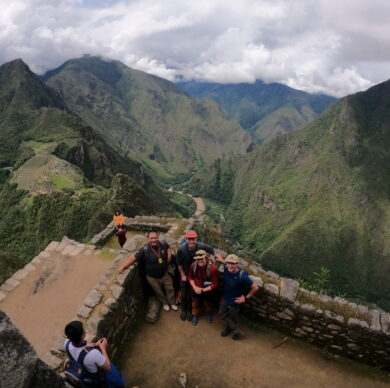
This archaeological center is a monumental work of Inca architecture, which was built on two mountains in a strategic place that dominates the entire valley. This military, religious, administrative and agricultural complex.
The entrance to this beautiful city is through the door or Inti-punku made of stone and double imperial jamb, then we will climb some rigorously well-designed stairs and above is the masterpiece of the Inca architects and stonemasons.
The main temple has a front with six pink granite monoliths brought from the Chaquicata quarry which were brought and perfectly assembled in the stone.
Ollantaytambo is the only city that is almost intact and its houses still serve as homes where their descendants live.
This town of Ollantaytambo is known as the living Inca town.
Pisac archaeological center:
Pisaq, which means Pisaca (Andean partridge), in Pisaq there were remains of a pre-Columbian cemetery, probably the largest in America, which today looks deserted and devastated.
In the center of the Pisaq temple, we can see an Intiwatana and fine buildings inhabited by the Inca nobility 500 years ago. impressive construction built during the period of the rise of the Inca empire.
Here we can observe the great work achieved by the Incas, through endless agricultural terraces that adorn virtually all the mountains around them, these terraces are two or three meters wide that they prepared for planting. After our visit to this ancient Inca citadel.
This archaeological center of Pisaq is famous for being an astronomical observatory, you can also see how the Inca agronomists solved the problem of planting on the slopes of the hills, Pisaq is a mestizo town built on indigenous remains, in this little town they give mass in Quechua or runa simi, our mother language, the main square is an interwoven place full of color and various items for sale.